-

main menu

version français

The first entirely
photographic magazine 


Directeur:
Michel Ardan 

BRUSSELS - In a straight line from the Perrault's book of tales, Cinderella came, during some days, to confide his wonder and his dreams on the scene of the Royal Theater of the «Monnaie» in Bruxelles. The opera «La Cenerentola» (small cinders) of Rossini has ravished many spectators by the wonderfull interpretation of his artists, his sumptuous scenography and his admirable staging that could almost make forgett the splendid work of the great italian composer.

THE MYTH

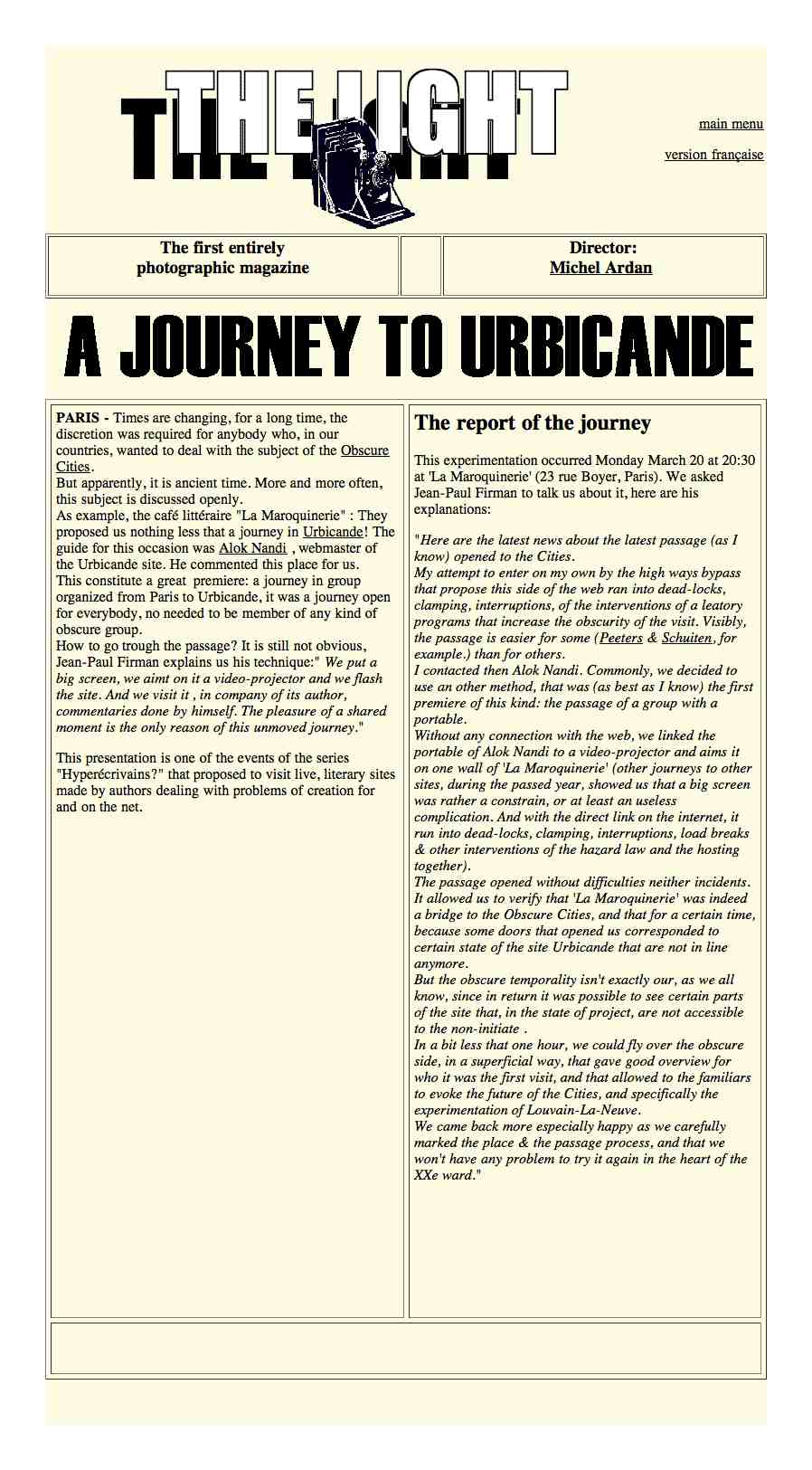
The opera, as the tale do, tell the story of a the poor Cenerentola, young girls desinheritzed and despoiled by an infamous father who doesn't want to recognise her, prefering his two other sisters. Cenerentola, helped by the mysterious Alidoro, will find love and success with the young prince Don Ramiro.

But here, no pretty fairy or any dancing shoe that will help the prince to find again his beautifull unknown. The story deals more with the symbolism of the tale and the strong or weak psychology of the characters.

THE STAGE

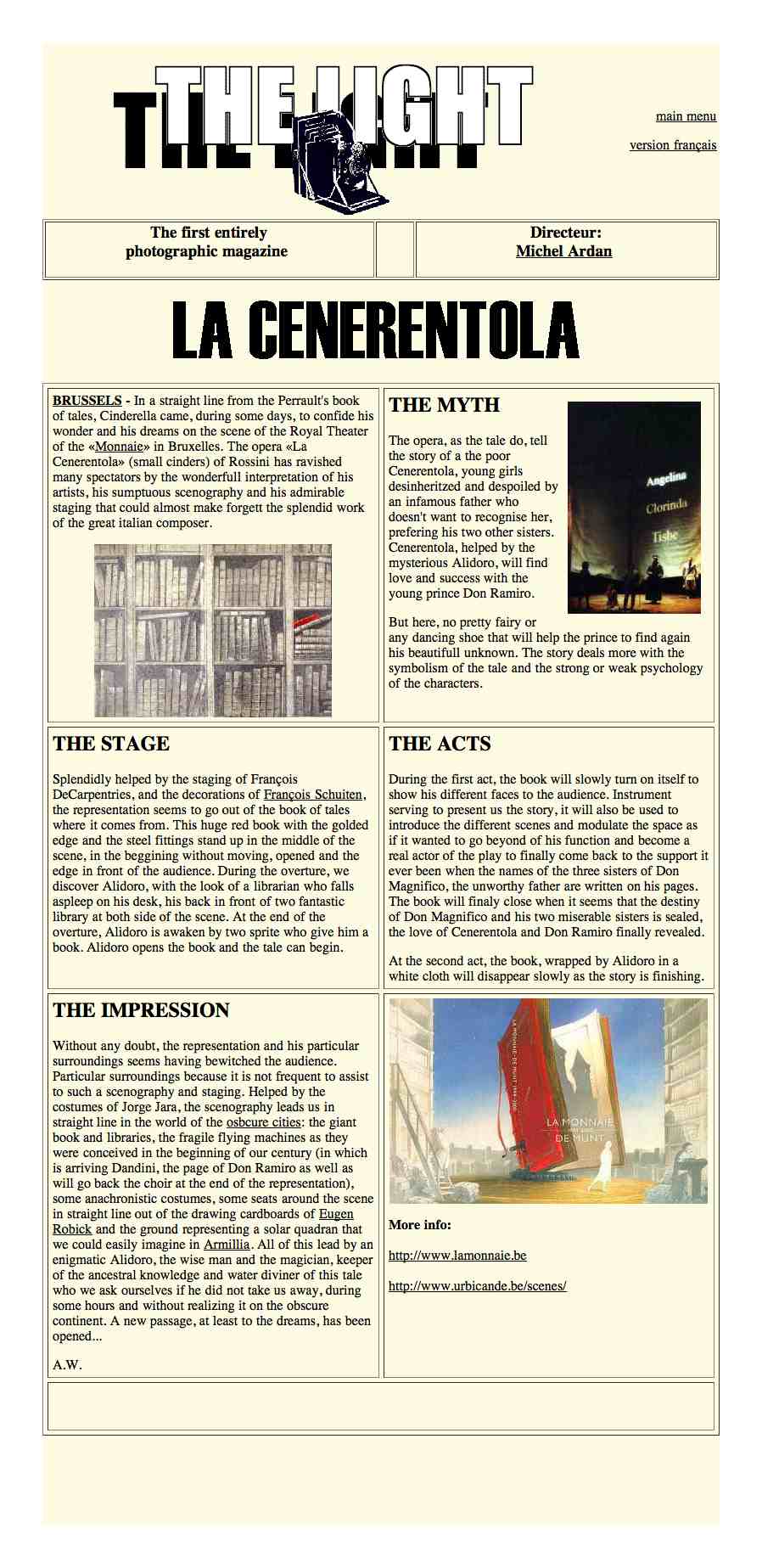
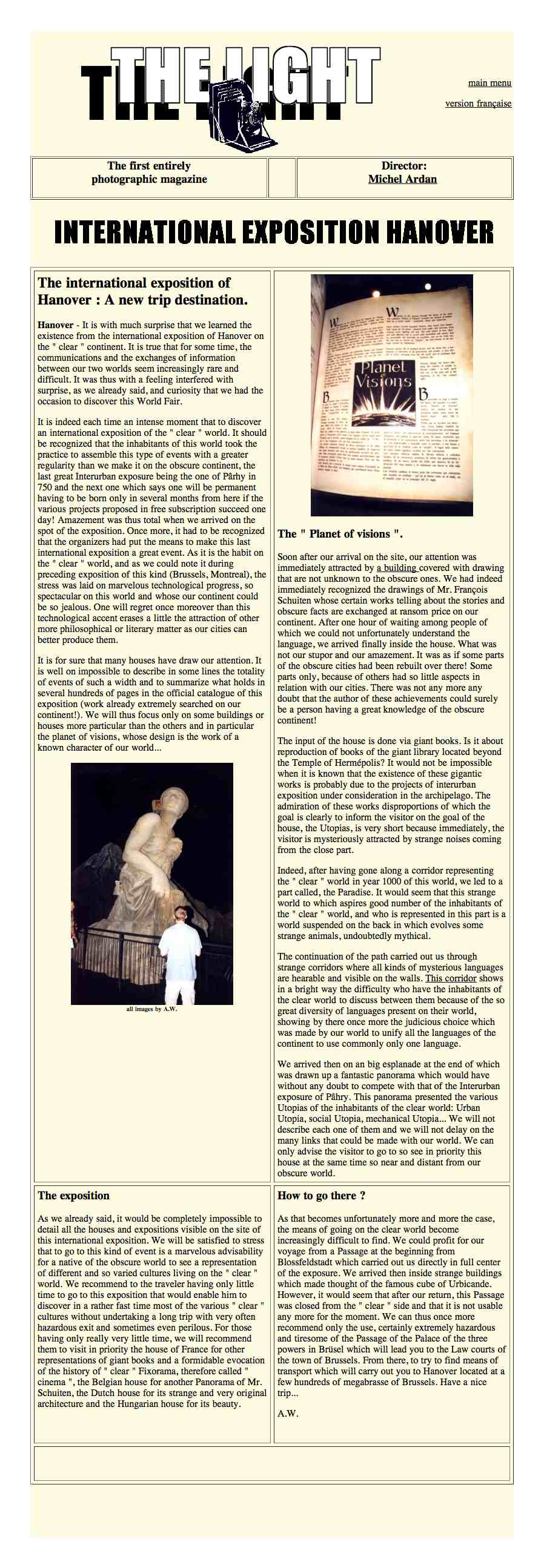
Splendidly helped by the staging of François DeCarpentries, and the decorations of François Schuiten, the representation seems to go out of the book of tales where it comes from. This huge red book with the golded edge and the steel fittings stand up in the middle of the scene, in the beggining without moving, opened and the edge in front of the audience. During the overture, we discover Alidoro, with the look of a librarian who falls aspleep on his desk, his back in front of two fantastic library at both side of the scene. At the end of the overture, Alidoro is awaken by two sprite who give him a book. Alidoro opens the book and the tale can begin.

THE ACTS

During the first act, the book will slowly turn on itself to show his different faces to the audience. Instrument serving to present us the story, it will also be used to introduce the different scenes and modulate the space as if it wanted to go beyond of his function and become a real actor of the play to finally come back to the support it ever been when the names of the three sisters of Don Magnifico, the unworthy father are written on his pages. The book will finaly close when it seems that the destiny of Don Magnifico and his two miserable sisters is sealed, the love of Cenerentola and Don Ramiro finally revealed.

At the second act, the book, wrapped by Alidoro in a white cloth will disappear slowly as the story is finishing.

THE IMPRESSION

Without any doubt, the representation and his particular surroundings seems having bewitched the audience. Particular surroundings because it is not frequent to assist to such a scenography and staging. Helped by the costumes of Jorge Jara, the scenography leads us in straight line in the world of the osbcure cities: the giant book and libraries, the fragile flying machines as they were conceived in the beginning of our century (in which is arriving Dandini, the page of Don Ramiro as well as will go back the choir at the end of the representation), some anachronistic costumes, some seats around the scene in straight line out of the drawing cardboards of Eugen Robick and the ground representing a solar quadran that we could easily imagine in Armillia. All of this lead by an enigmatic Alidoro, the wise man and the magician, keeper of the ancestral knowledge and water diviner of this tale who we ask ourselves if he did not take us away, during some hours and without realizing it on the obscure continent. A new passage, at least to the dreams, has been opened...

A.W.

More info:

http://www.lamonnaie.be

http://www.urbicande.be/scenes/